Category: AI
-
VINE GenAI Guidelines for Schools 2026
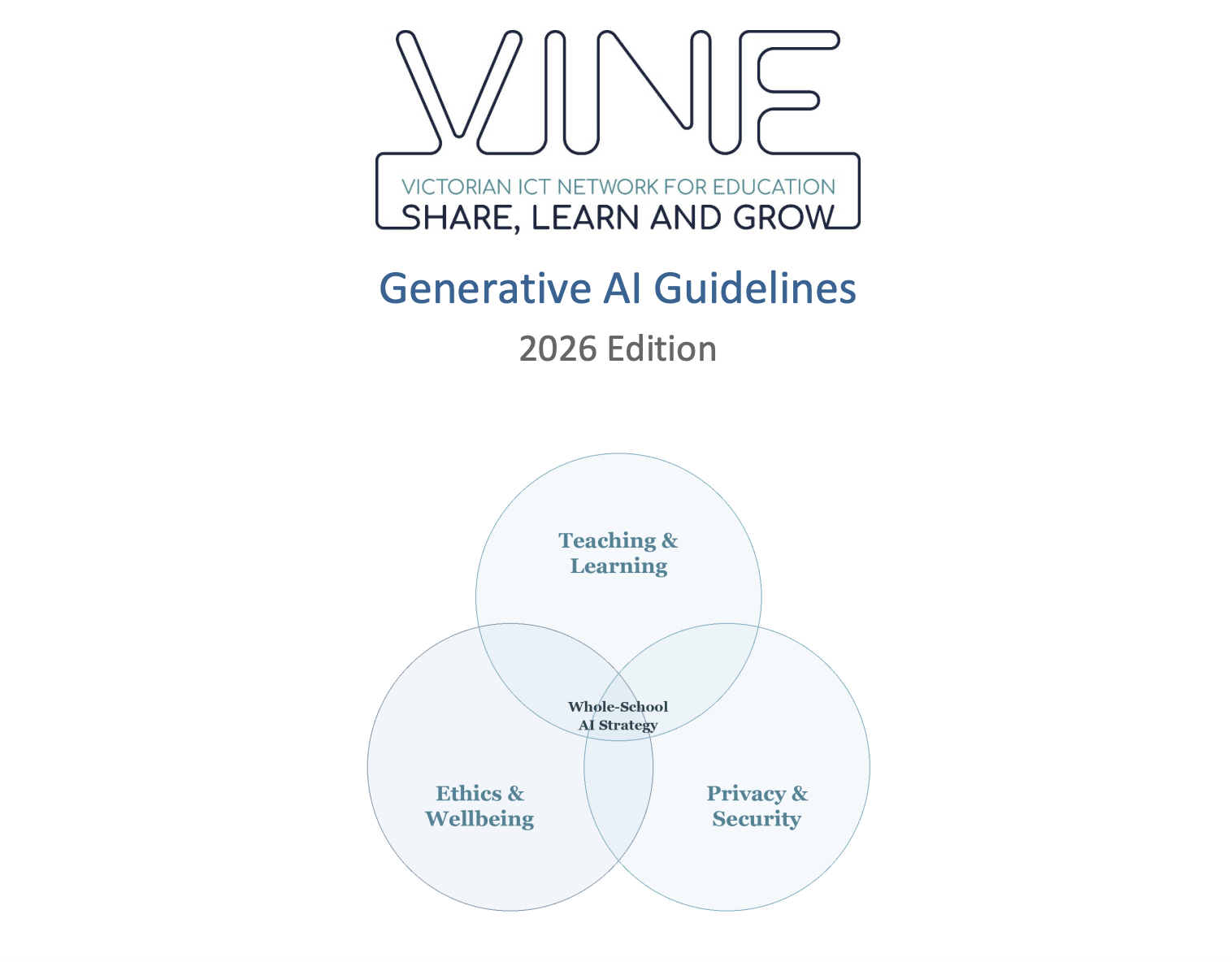
Explore the 2026 updates to VINE’s Generative AI guidelines, addressing AI’s evolving role in education and offering practical tools for schools.
-
Expert Signals: Fidelity

This post explores the concepts of high fidelity (hi-fi) and low fidelity (lo-fi) in music, emphasising the human essence behind audio recordings. It critiques AI’s role in music and knowledge transfer, asserting that it strips away the personal nuances that convey true understanding and experience, ultimately diminishing the value of learning.
-
IYKYK Part 3: Who Gets to Know?

The series discusses GenAI’s discoverability and access issues, highlighting how major platforms fragment capabilities through pricing tiers. Free users perceive limitations as a lack of utility, exacerbating an invisible gap between schools with varied resources. It urges for sandboxed solutions to explore advanced tools, rather than restrictive policies that hinder innovation.
-
Gradually Reclaiming Responsibility

The article explores the concept of resistance in educational contexts, especially with the rise of GenAI technology. It examines how students must actively maintain ownership of their learning and critical thinking, especially as AI takes on more responsibility in the learning process. The traditional gradual release of responsibility model is adapted to consider AI’s impact,…
-
A Taxonomy of Agentic AI

The evolution of AI agents, particularly since 2024, has shifted from marketing hype to practical applications across various levels of capability. AI agents, defined as large language model-based applications, perform semi-autonomous tasks using code. This taxonomy categorises AI agents from simple code-using chatbots to complex teams executing multi-faceted projects, highlighting their growing significance in educational…
-
The Effort Economy of Slop

The concept of “AI slop” highlights the imbalance in effort between creators and consumers of content generated by artificial intelligence. As production becomes effortless, the burden shifts to the consumer.
-
IYKYK Part 2: Did You Know AI Can Do… That?

The text-box and blinking cursor of GenAI chatbot interfaces is the main thing holding us back from exploring their use. Did you know AI can do… that?
-
Resistance as a Framework for Combating Cognitive Offload
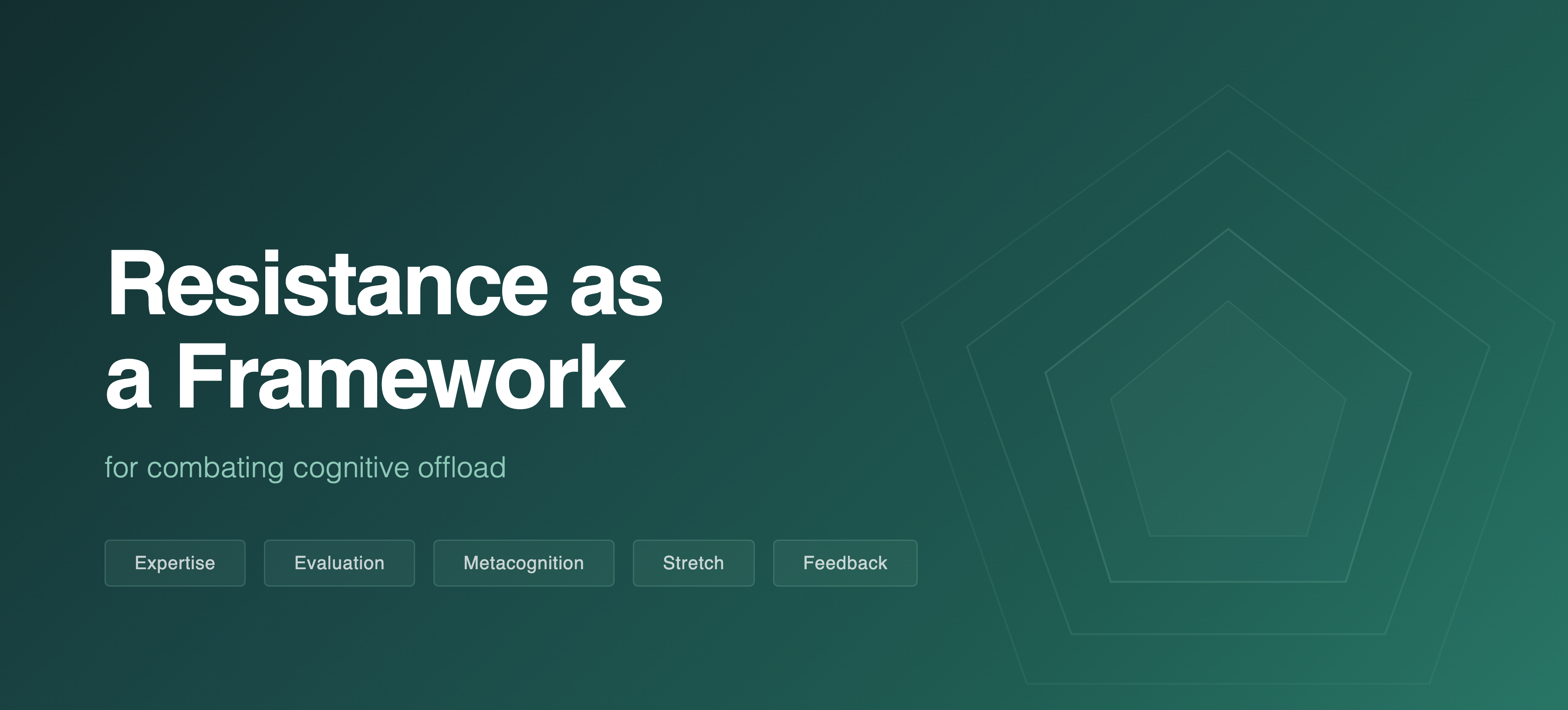
This post discusses the necessity of resistance in using AI for education, comparing it to physical training. While generative AI can lead to cognitive laziness, integrating resistance can help maintain learning integrity. Here’s a framework exploring expertise, evaluation, metacognition, cognitive stretch, and feedback to ensure beneficial AI usage.
-
IYKYK: How Do We Know What AI Can Really Do?

The Discoverability Problem in GenAI means users are often unaware of capabilities due to poor UX. If the tech won’t change, we need new mental models.
-
You Don’t Need an AI Policy

On Friday I told a room full of school leaders that they didn’t need an AI policy, you could hear a pin drop — right up until the point people started to laugh and nod their heads. I was speaking with members of Independent Primary School Heads of Australia (IPSHA), in a series of sessions…